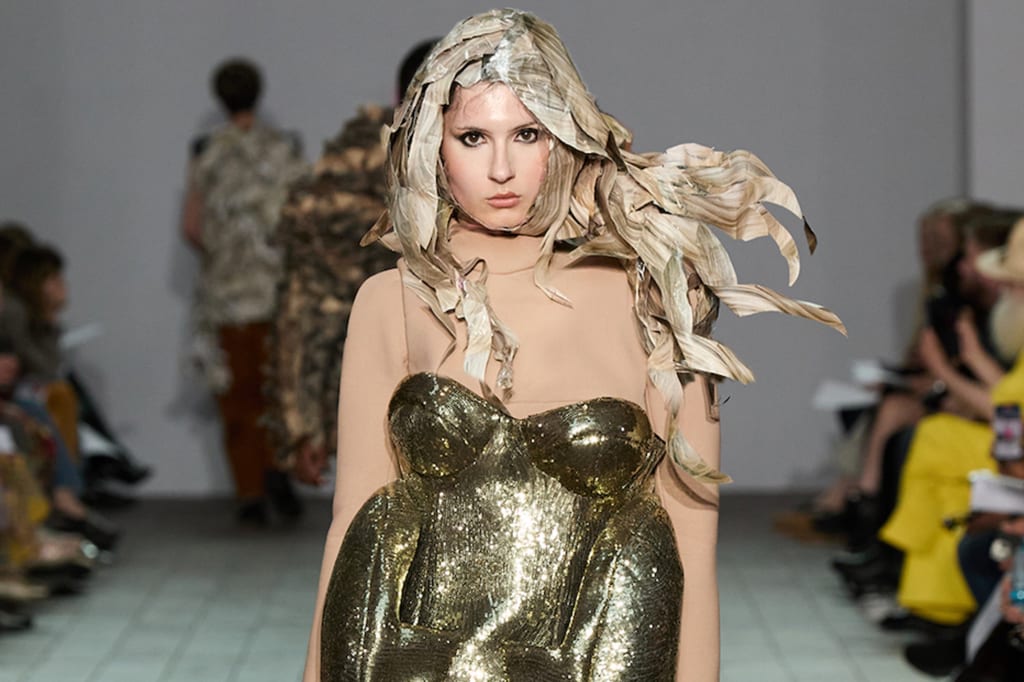
On June 4th, designer Joshua Cornwell hosted their 2025 CSM BA Fashion Graduate collection to the sound of Charli XCX’s “!Franchesckaar!” an unreleased track written by the self-dubbed “young girl from Essex.” The song was a fitting soundtrack for Cornwell’s collection, not only because its confident lyrics perfectly encapsulate the personality of their designs, but also because, as they explained when we linked up with them post-show, the collection as a whole is inspired by a new archetype straight out of Essex. “We know what the “Essex girl” is; we know what the “Essex boy” is,” – but as a member of the queer community growing up in the home county, navigating the Essex experience is identity defining even in and of itself.
What is the message or inspiration behind your graduate collection?
“My collection is inspired by my upbringing in Essex, looking at my experience as a queer person growing up in a very highly gendered landscape. We know what the “Essex girl” is; we know what the “Essex boy” is, and these stereotypes are almost like rites of passage within the community where I grew up. But as a queer person, you kind of don’t actually fit into either of them.
“[My collection is] looking at navigating that as a teen, and representing the awkwardness of trying to fit in. The collection is titled “Cinch,” and it looks at that as being an act of squeezing or fitting into something.”
How do you want people to feel when they wear your designs?
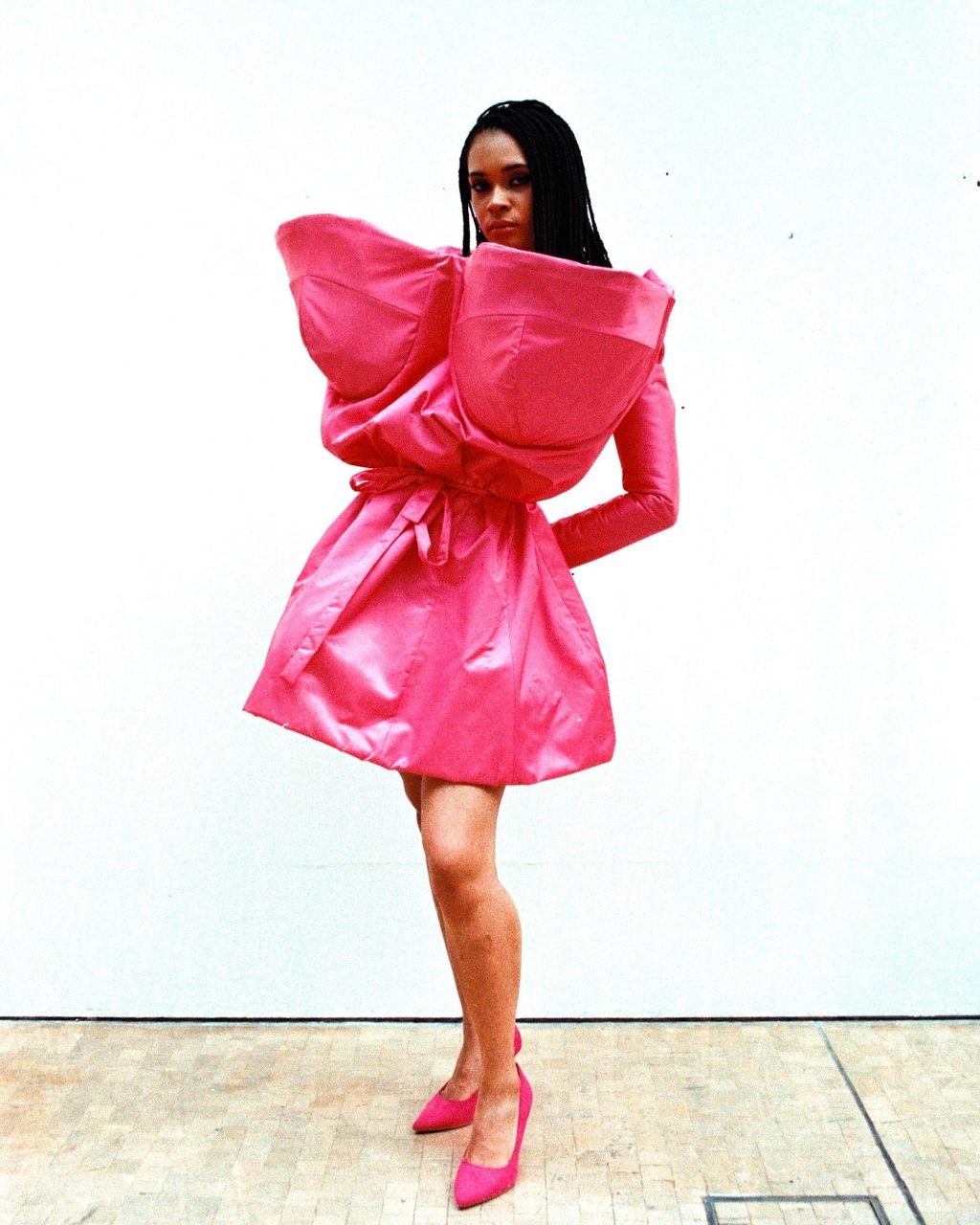
“Well, I’m always checking in with models to see how they feel. The model that wore the final look [in my grad collection], Cameron – she’s like a muse to me – and I always wanted her to feel powerful in it. I think it’s important for my models and the people that wear my clothes to resonate with what it’s about. It was really important for them to embody exactly what [the collection] is about.
“I feel we all can relate to that idea of the desire to fit in and that desire to cinch. Although, as much as [the collection is] about cinching, it’s not about making someone feel restricted or uncomfortable. It’s always about making someone feel confident and powerful.
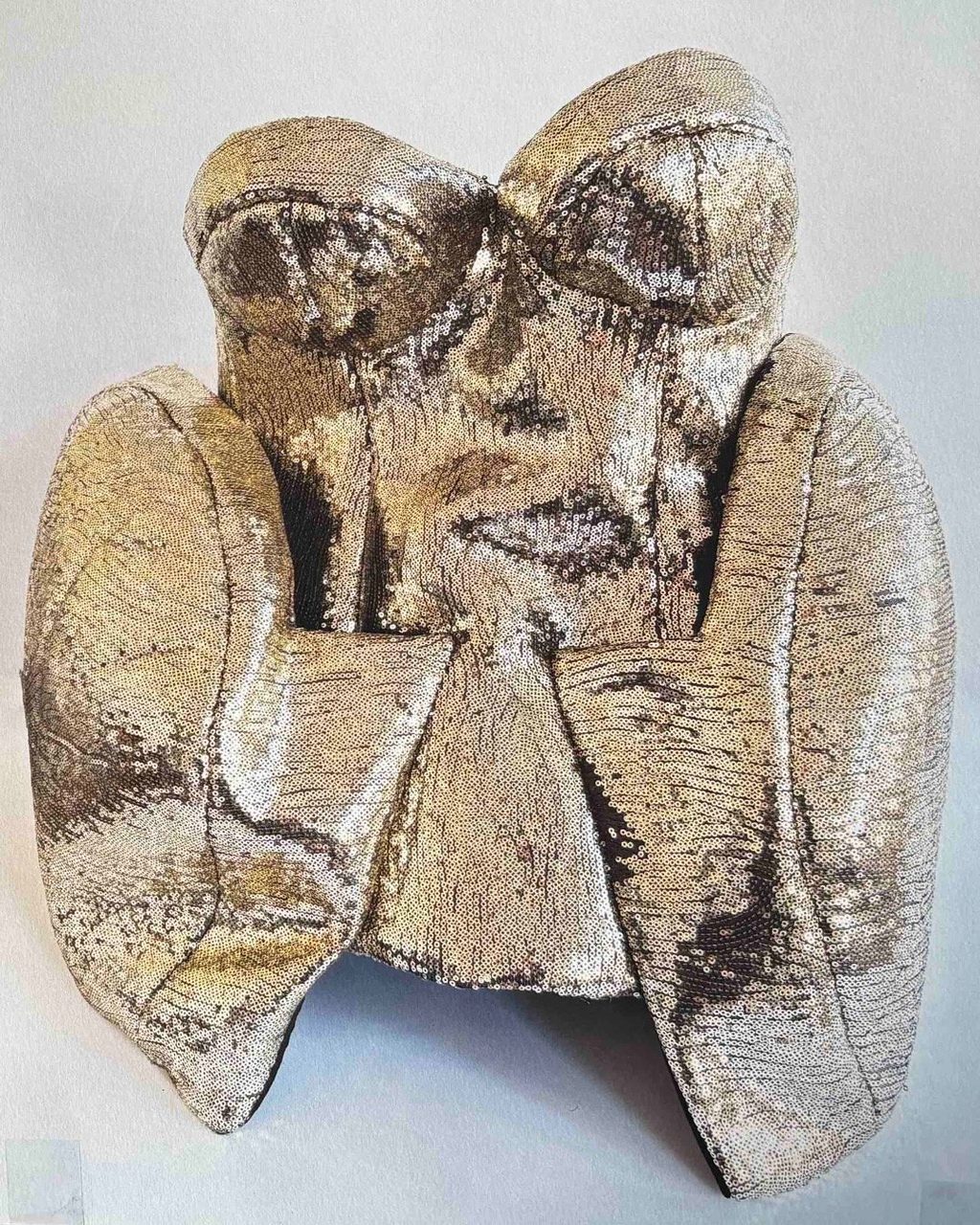
“All of the people that modelled my collection resonate with it and wanted to do it justice. I [always knew I] wanted that personable relationship where [my models] really know what it’s about. All of my models I walk through what my collection is about and show them all the sketches, show them all the research, so they all like can understand.”
That relationship with your models was definitely reflected on the runway at your grad show. How did you cast them?
“I have a brilliant friend Katie Mayo who was doing all my casting. It was beyond just someone doing my casting – we both understand each other’s minds so well. It was a mixture of street casting, some of them were my friends, some people went through agencies, but the bunch of people that I got in the end really represented what I’m trying to talk about. None of them really fit into that like stereotype of how we’ve seen Essex before, but they all can relate to what I’m trying to say. That was really integral.”
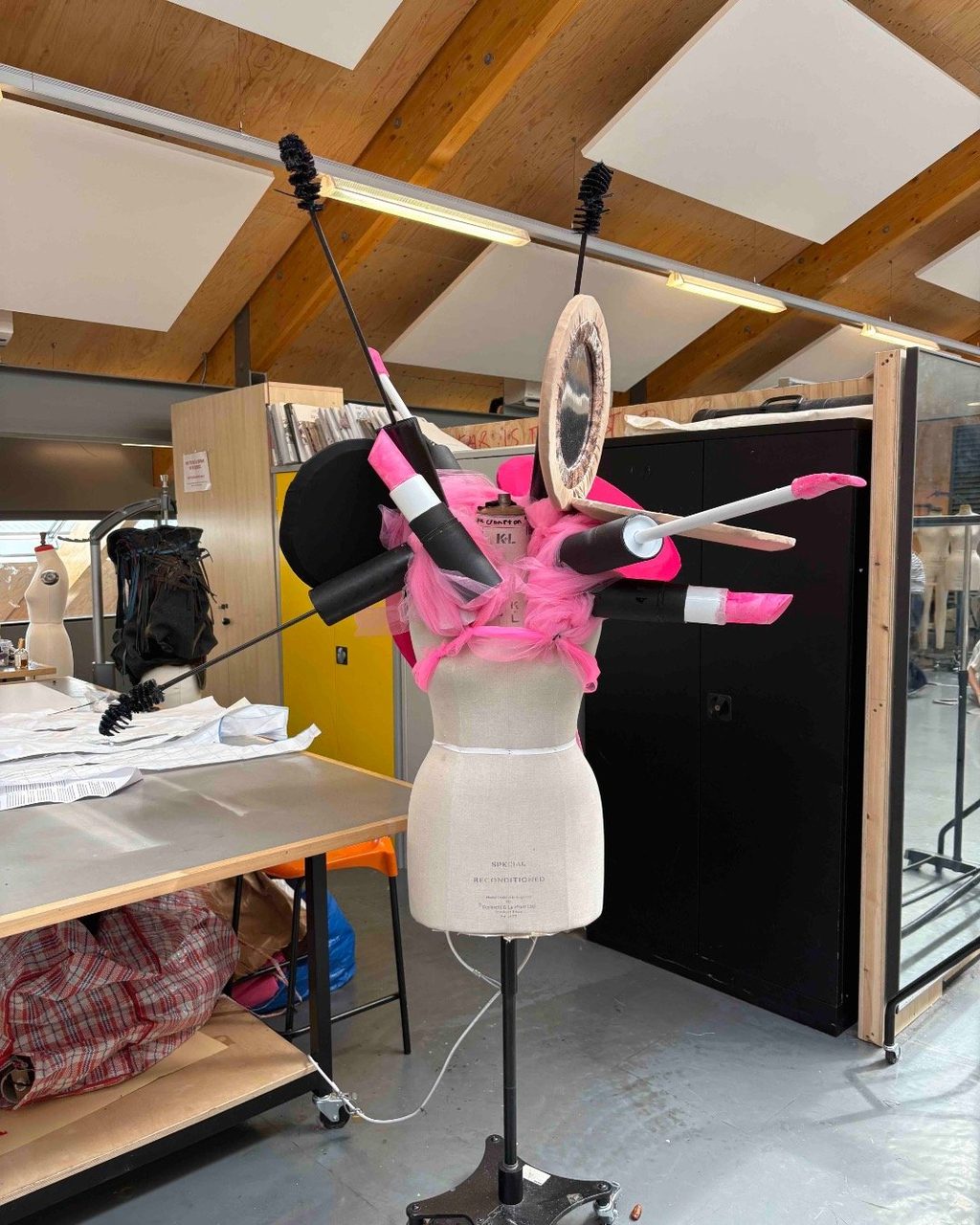
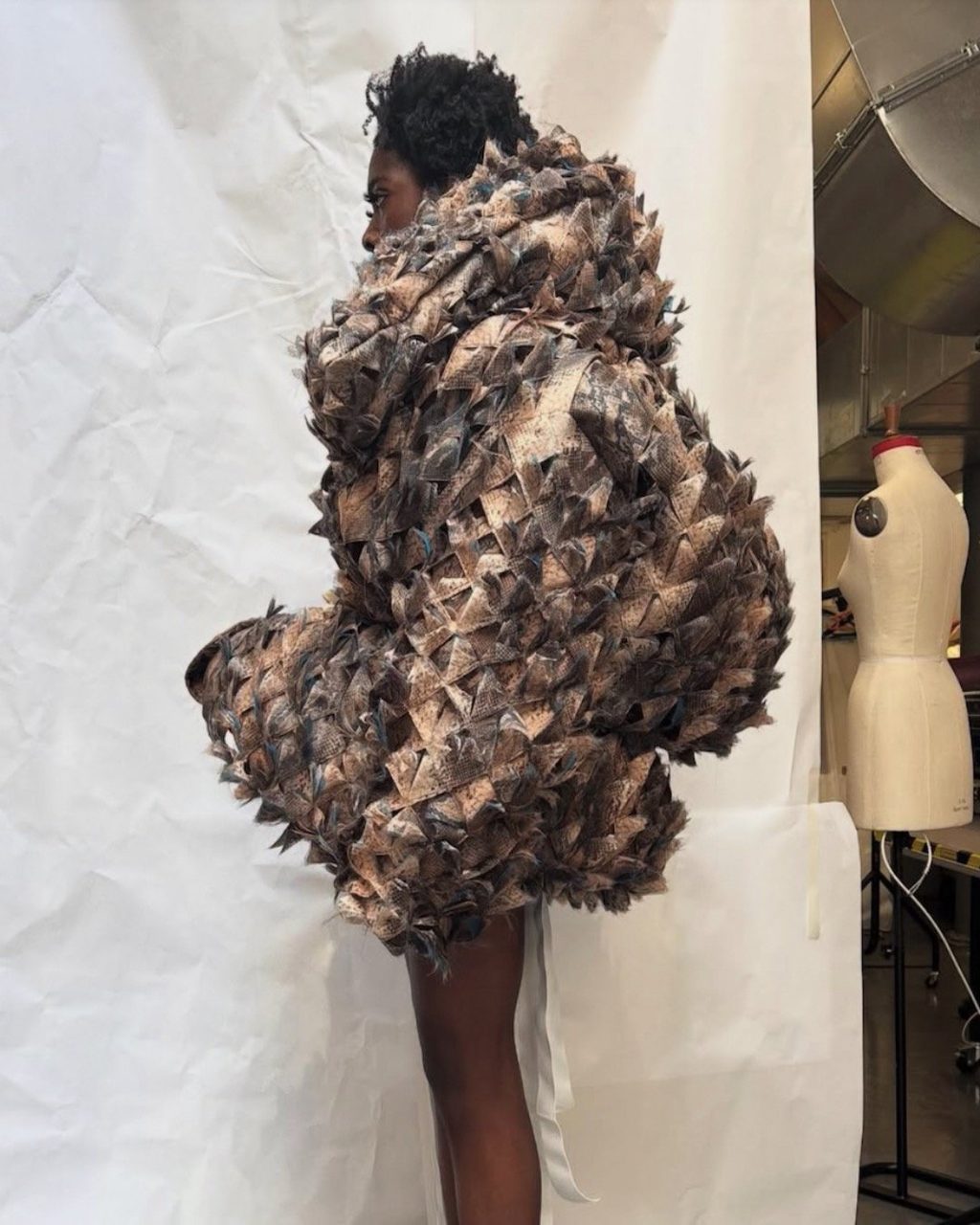
Look 6 in your collection was a personal highlight for me. What was on your mood-board when you imagined this piece?
“It’s more inspired by a feeling. It’s inspired by, like, digging into your mum’s makeup bag and pulling out all these things as a kid. That’s sort of why I was like, “it needs to be massive,” because that as a child, that’s monumental, especially growing up queer.”
What would you say is the most valuable thing you’re taking away from your time at CSM?
“CSM is made by the students, and I think I was blessed to be amongst a year of so many talented people. CSM always produces incredibly talented people, but I think our community was so supportive of one another. I have like friends like Ayham [Hassan] who’s Palestinian, from a completely different walk of life to me, but me and him were [always] chatting and saying, “oh, make this bigger,” and “make this more crazy.”
“And Isobel Dickens is like my absolute best friend, so seeing her open the show: that’s a memory I’ll always have. I could list all the people that are great and amazing, but I think that’s the thing I would take away that I’ve learned the most from my peers and they’ll forever be that community of people that just inspire you. We’re from all from different walks of life but we all understand each other.”
Who would you love to see wear one of your designs, and why?
“I mean, I think [the people] who wore it on the day were exactly who I wanted to wear it. But in terms of people that we know and love, I mean, I love Addison Rae. She’s like the epitome of the idea of breaking down preconceptions, so she would be incredible in it. I can just see her in some of the looks. But I think really, it’s always about putting it on people that really resonate with it. So whoever really like… resonates with it.”
During a time where corruption and controversy is so prevalent, why do you feel fashion is still important right now?
“Fashion is an art form. [Although] I think sometimes we can view fashion as this sort of frivolous exploration of superficiality, realistically, art is not seen in that way – and, often [that preconception of fashion as frivolous] is rooted in like histories of misogyny. Whereas, art has always existed alongside the world; we’ve always made [art] as a response to things. Art has always been through bad times, through corrupt times, art has always been necessary as [a part of] culture and a way for humans to digest all these things.
“I sometimes think fashion is seen as an escapism, but I don’t necessarily think it always is. Fashion can be very rooted in our reality, and that’s a testimony to all the [CSM] students that have produced work this year. It’s radical. This year is unlike any other; it’s produced some crazy, radical things that have pushed the extremes of art and fashion, and I think it is necessary for that.
“I think we’re at this turning point where queer people are being marginalised and attacked, and everything that’s happening in Palestine, and all these things. In the middle of all that, fashion’s like an act of rebellion.”
As a new designer emerging onto the fashion scene, what’s one thing about this industry that you would like to change?
“The industry is completely behind in diversity… completely. It represents on the runway; it’s reflected in heads and creative directors; it’s on every level. I am surrounded by amazing, talented women, and amazing, talented people of colour, and you don’t always see that reflected in the people that are put into jobs. But with diversity comes better design, more human design, more rounded design.”
Can you describe what or where you want to be in five years using one word?
“Integrity – or something along the lines of being honest. I want to be honest with my work.”
What’s one piece of advice you’d give to yourself when you first started your course?
“You don’t need to have it all figured out in your first year. Have a bit more fun! There’s a pressure to know yourself at 19, and that’s not the case for anyone – as a designer or as a person – so allowing to like ease the pressure and not feel like you have to have all the answers.”
Lastly, is there anything else you want people to know about you or your work?
“There’s just more to come.”