Yesterday, Vogue Business released its report on the state of size inclusivity in fashion right now, titled The Size Inclusivity Report. Now, the publication’s findings are sparking conversations online around progress and inclusivity for plus-sized people in the fashion world, and why both are seemingly so hard for luxury fashion brands to grasp. Here’s what Vogue Business’s research found, and how people online are responding to it.
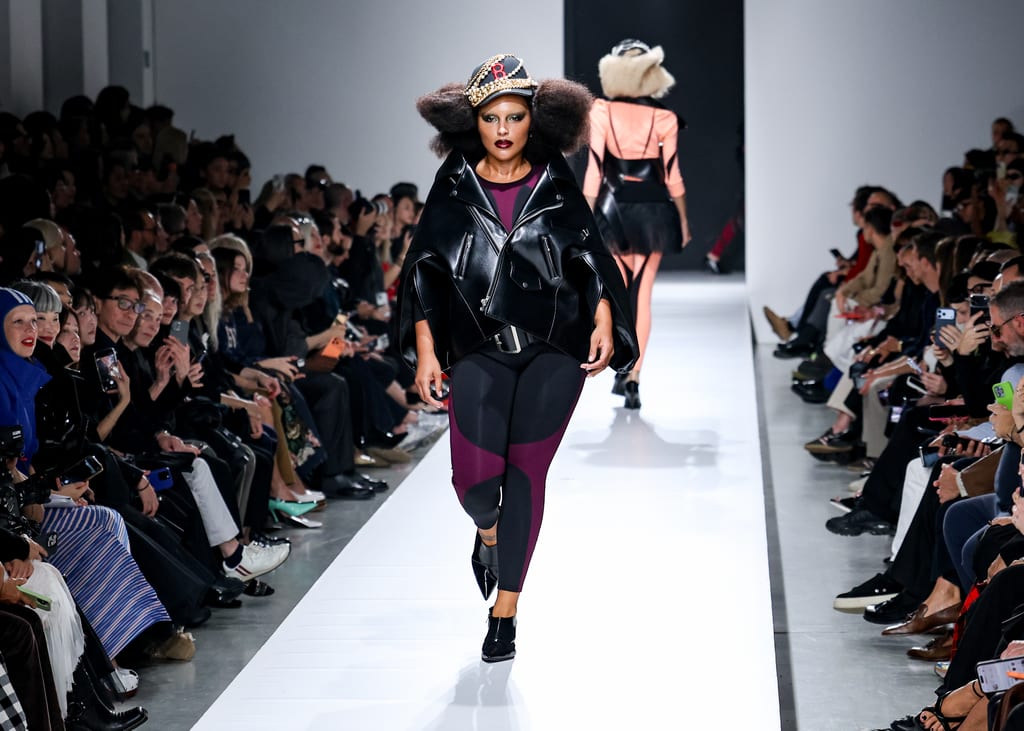
The new research carried out by Vogue Business for the The Size Inclusivity Report evaluated the 9,283 looks shown in New York, London, Milan and Paris at Spring/Summer 2027, and found that the industry has made the tiniest effort to improve its inclusivity. This season, we saw a minuscule 0.1% improvement in curve (mid and plus-size) representation on the runway, compared to FW26. It’s a tiny move in the right direction, but at least we’re heading that way.
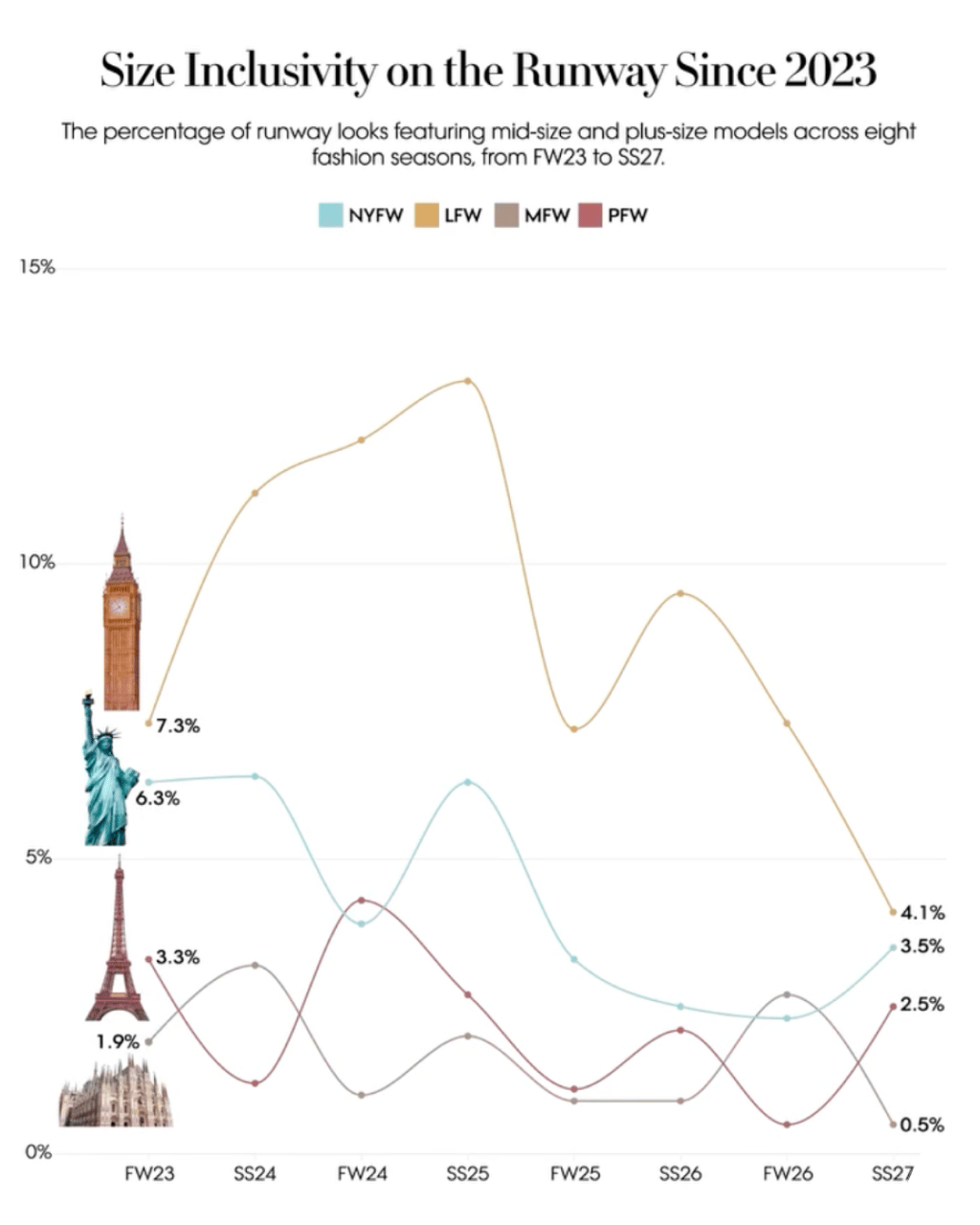
On the runway, London had the highest representation of mid- and plus-sized looks; however, the city has done better in the past, considering that at SS25 LFW saw 13% mid- and plus-sized representation, and at SS27 it was only 4.1%. Despite the increase in inclusive sizing compared to last season, numbers are not high, and plenty of people have commented that “inclusive” mainly seems to mean mid-size, not plus-size. Even among the brands with the most representation, plus-sized models are rarely more than 5% of looks.
Looking at the pieces that brand’s actually sell, New York had the most inclusive sizing range. 88% of brands at NYFW offered sizing up to at least a size 18, and the most common largest size is a 16 (seen across 47.8% of brands). Interestingly, Milan — which does worst in terms of inclusivity on the runway, at a low 0.5% — was the city that’s brands offered the most inclusive sizing, with the highest share of brands selling size 18 or above.
As the comment section under Vogue Business’s report on Instagram corroborated, it’s so disheartening to see the fashion industry moving backwards in terms of inclusivity for the past couple of years, and this season making the tiniest step in the right direction, but hardly enough to have any effect. Representation of mid- and plus-sized bodies on the runway is near 0% on a majority of the biggest luxury house's runways, and without constant pressure that won’t change.
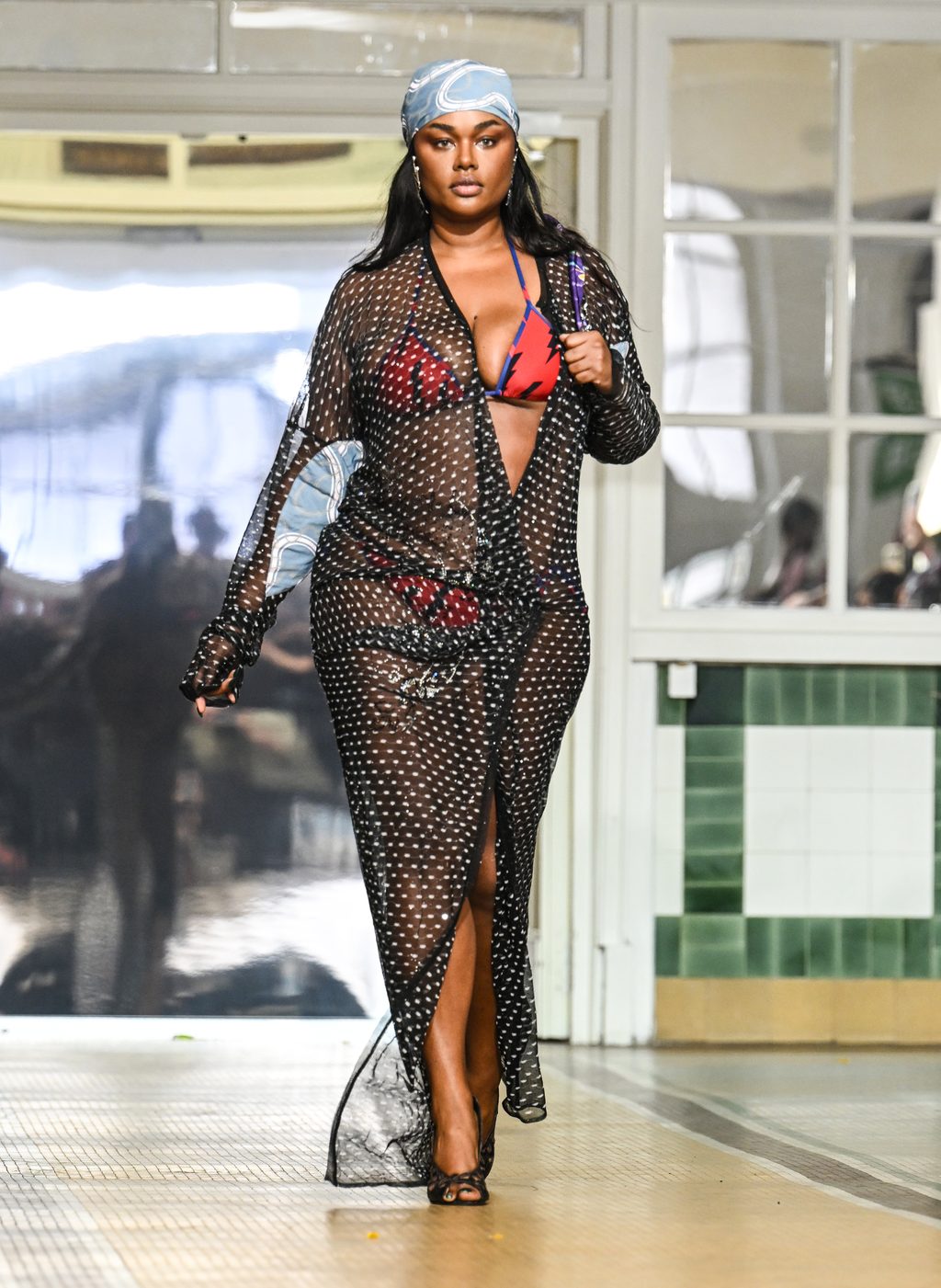
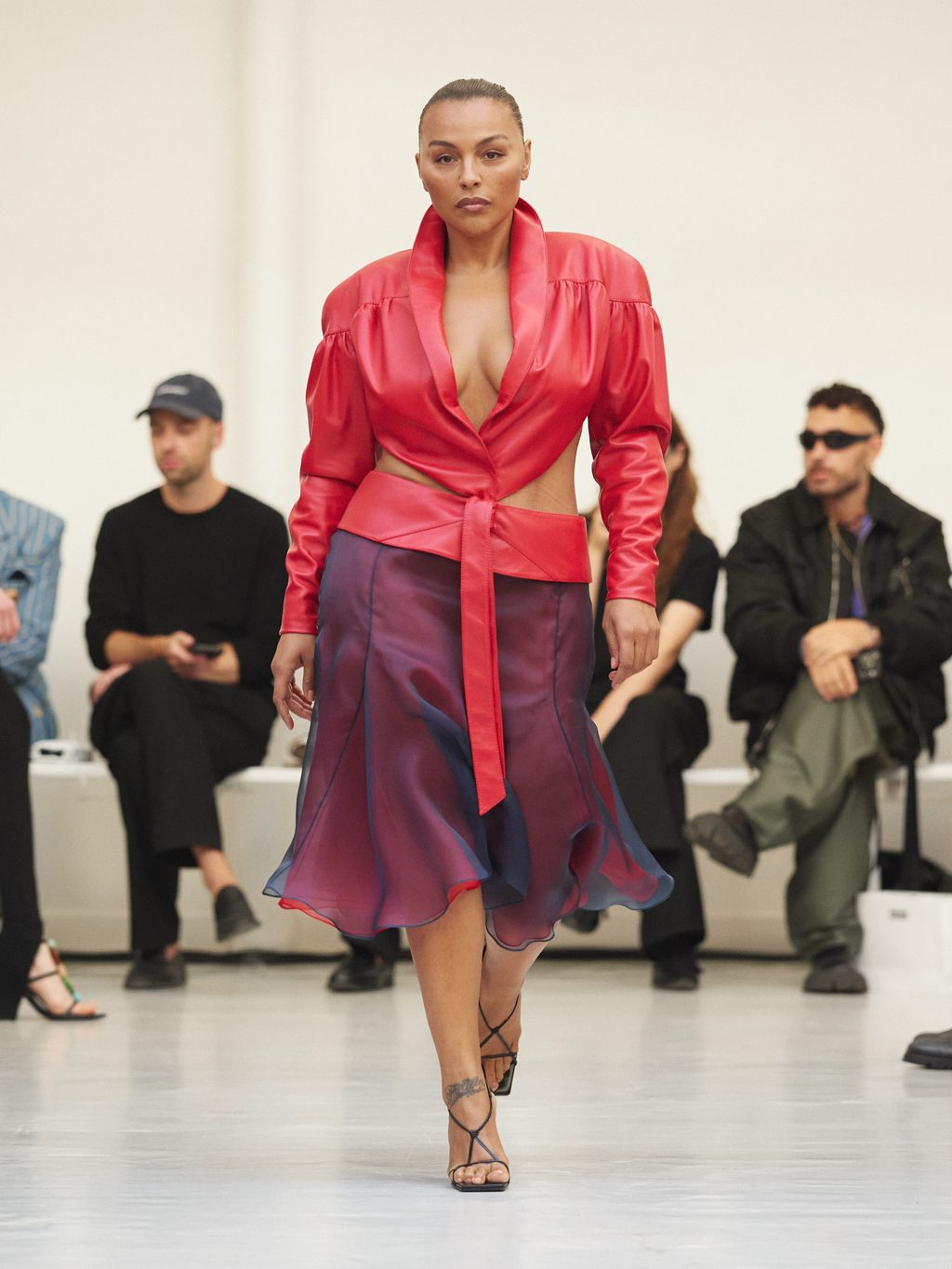
The trend in using, and subsequent normalisation of, weight-loss drugs like Ozempic and Mounjaro in the media has clearly had an impact. Vogue Business, only one day after publishing The Size Inclusivity Report, also shared a piece on why three designers think “fashion keeps getting skinnier.” Speaking to Ester Manas, Sjo Dwyer, and Karoline Vitto, Vogue Business shared that their perspective is that “we’re facing a pandemic of people shrinking.” The popularity of weight loss drugs have basically given brands permission to step even further away from inclusivity.
Another reason that one user suggested inclusivity in fashion was getting worse is the current climate towards women and women's rights. As @mogueontheroad commented under Vogue Business's Instagram post, "Check out The Beauty Myth by Naomi Wolf, it argues that the push for thinness and unnatural bodies rises when women push for equal rights." It does feel like the world is becoming less and less tolerant of women, and particularly those who don't fit the traditional archetype of womanliness, which includes being thin and conventionally attractive.
Whatever the cause, we can only hope that fashion will make a U-turn and begin prioritising inclusivity on the runway and in their sizing soon. Well, we can do more than hope: we can ask for it, constantly, until they can't ignore us any longer.